Daisy Jones Book vs Show: What Changed and Why the Novel Still Matters
Here’s the verdict upfront: the daisy jones book vs show debate doesn’t have a clean winner — and that’s actually the most interesting thing about it. Taylor Jenkins Reid’s 2019 novel is a masterclass in voice and restraint. The Amazon Prime Video series, which premiered March 3, 2023, is a visually stunning, emotionally generous adaptation that earned nine Emmy nominations. Both versions are worth your time. But they are doing very different things, and knowing what changed — and why — will make you appreciate both a whole lot more.
Whether you binged the show first or devoured the book in one sitting, this breakdown covers everything: the format shifts, the character changes, the timeline compression, and the question of whether the adaptation lived up to the source material. Spoilers ahead for both.
Daisy Jones Book vs Show: The Core Differences at a Glance
Let’s start with the structural stuff before we get into the emotional deep cuts.
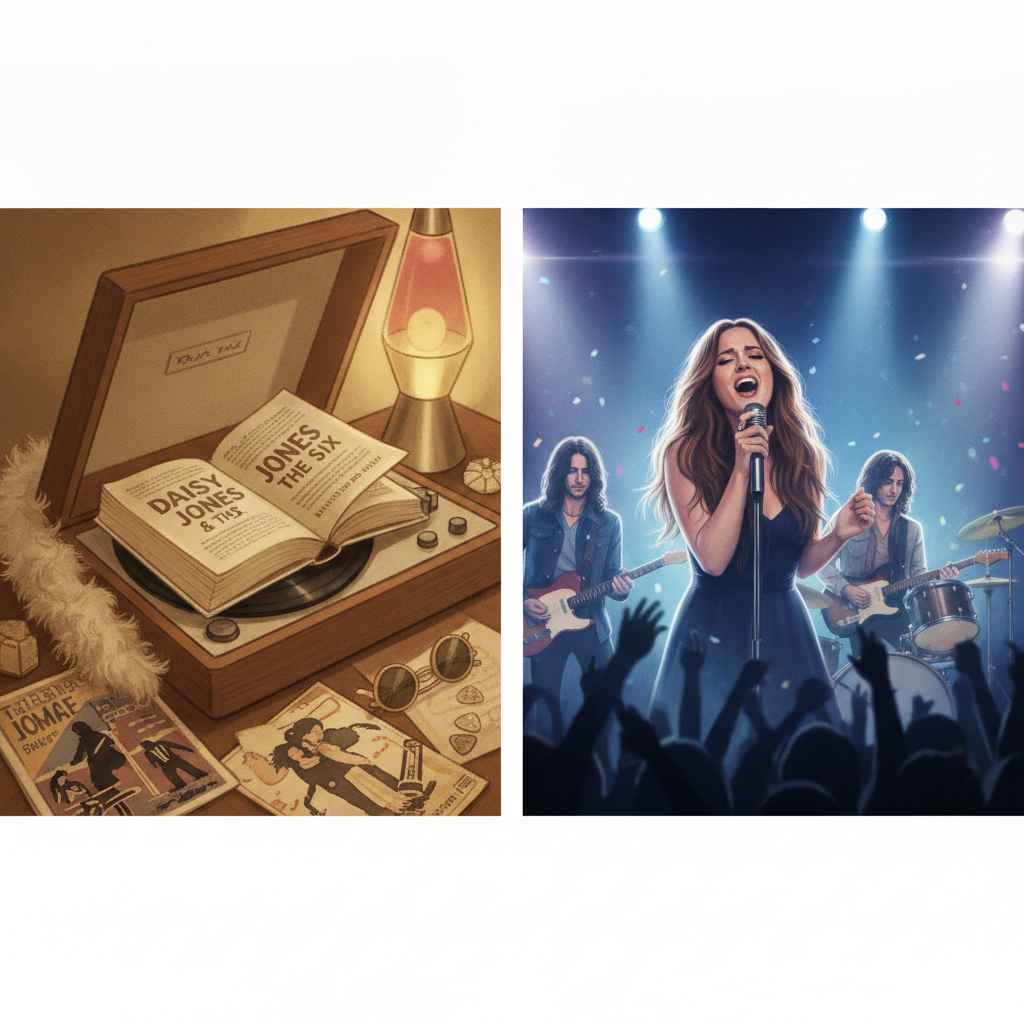
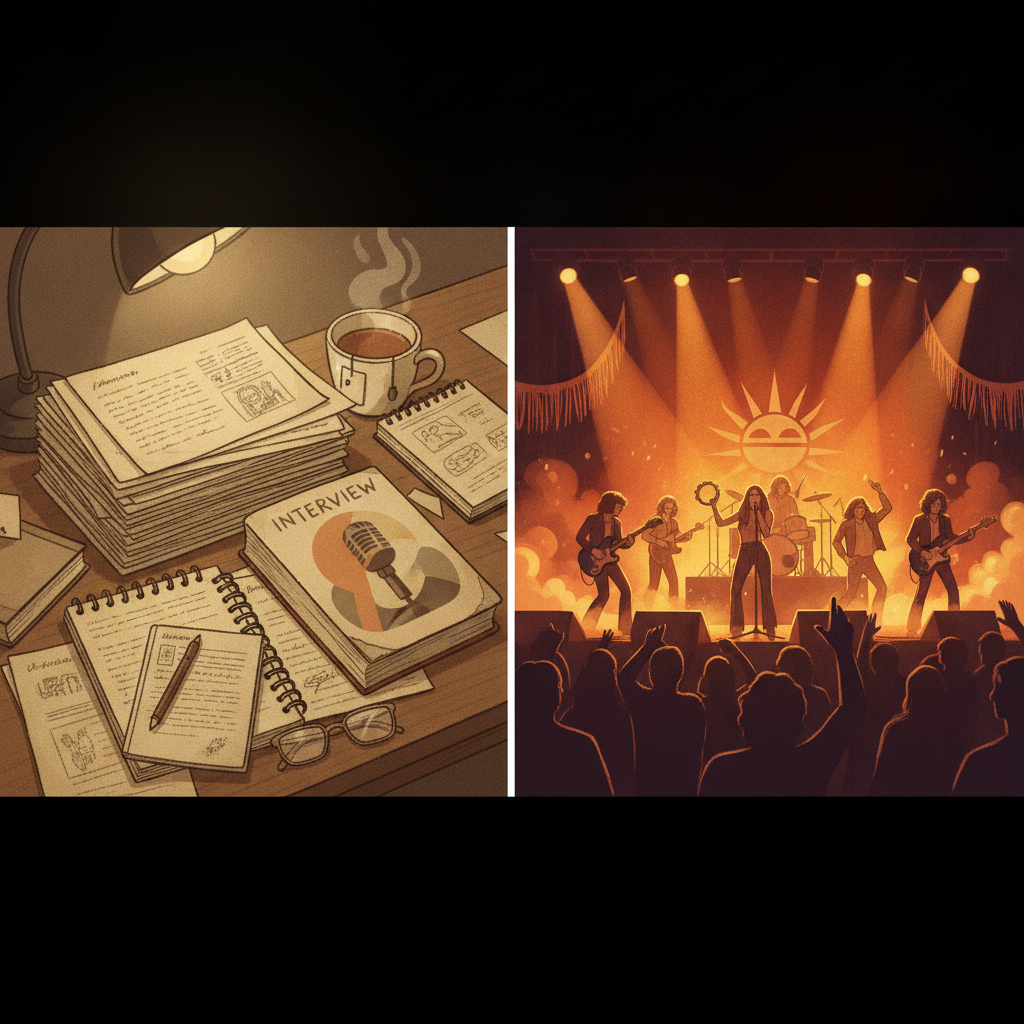
The novel is written entirely as an oral history — a series of interviews conducted approximately 40 years after the band’s breakup in the 1970s. You never get a narrator telling you what to think. You get competing memories, unreliable accounts, and gaps that the reader has to fill in. It’s a formal choice that makes the book feel like a documentary you’re reading, not watching.
The show, adapted by Scott Neustadter and Michael H. Weber — both self-described fans of the book before they ever touched a script — translates that oral history framing into a hybrid format. There are talking-head interview segments that nod to the book’s structure, but the majority of the show plays out as a conventional period drama. You see the 1970s in full color, with real performances, real costumes, and actual original music written for the series.
That shift from “told” to “shown” is the biggest philosophical difference between the two versions. Neither approach is wrong. They’re just different storytelling philosophies.
How the Oral History Format Works on the Page
If you haven’t read the book yet, here’s what makes it special: Taylor Jenkins Reid gives every character a distinct voice through interview snippets alone. There’s no prose description of how Billy Dunne looks when he’s lying. There’s no authorial note explaining that Daisy is more fragile than she lets on. You piece it together from what people say, what they omit, and how their accounts contradict each other.
This is incredibly hard to pull off, and Reid does it with real confidence. BookBrowse’s review highlights exactly this — the format creates an intimacy that feels almost voyeuristic, like you’ve stumbled onto private testimony.
The audiobook version (running 9 hours and 3 minutes) leans into this even further by using a full cast of voice actors, making it feel like an actual documentary podcast. It’s one of the rare cases where the audio format genuinely enhances the source material rather than just delivering it.
The show can’t replicate that specific reading experience. But it wasn’t trying to. What it was trying to do was make you feel the music — and that’s a different goal entirely.
What the Amazon Prime Series Got Right
A lot, honestly. The casting is excellent across the board. The production design is period-perfect without tipping into pastiche. And the original music, written specifically for the series, is genuinely good — the kind of 1970s rock that doesn’t feel like a parody of the era.
The show also makes smart choices in expanding certain storylines that the book leaves deliberately vague. Camila’s interiority, for example, gets more screen time. In the novel, we understand her through what others say about her. The show lets us sit with her choices more directly, which some viewers found more satisfying and some book purists found unnecessary.
The SME Harbinger’s review of the Amazon Prime show notes that the series manages to feel like a love letter to the book rather than a replacement for it — which is about the best thing you can say about any adaptation.
Nine Emmy nominations confirmed that the industry took the show seriously. Whether it deserved every one of them is a longer conversation, but the recognition reflects real craft on screen.
Daisy Jones Book vs Show: Timeline Compression and What Was Lost
Here’s where the daisy jones book vs show comparison gets genuinely interesting from a craft perspective.
In the novel, the interviews are conducted roughly 40 years after the band’s 1970s peak. That temporal distance is part of the emotional architecture of the book. When characters reflect on what happened, they’re doing it with decades of perspective, regret, and revision. The gap between who they were and who they are now is the whole point.
The show compresses this. The framing device still exists, but the weight of all those decades feels lighter on screen. This is partly a practical television decision — you don’t want to spend too much time on aged makeup and retrospective talking heads when you have a gorgeous 1970s set to play in. But it does cost the adaptation something.
The novel’s emotional gut-punch comes from understanding that all of this is memory, filtered through time and self-interest. The show’s emotional punch comes from watching it happen in real time. Both are valid. But they hit differently.
Some subplots also get trimmed or restructured. Certain band members who feel fully realized on the page become more functional on screen. If you noticed that Graham and Eddie felt slightly underserved in the series, the book gives them considerably more texture.
Character Depth: Billy, Camila, and Daisy in Both Versions
The three-way emotional core of the story — Billy’s addiction and ambition, Camila’s quiet strength, Daisy’s self-destructive brilliance — works in both formats, but in different ways.
Billy Dunne is arguably more sympathetic in the show because you can see his struggle rather than just hear it reported. The performance adds nuance that the interview format necessarily withholds.
Camila is where the adaptation makes its boldest change. In the book, she’s almost mythologized — a figure of near-impossible grace and perception. The show humanizes her in ways that feel earned, giving her a specific professional identity as a photographer that grounds her outside of her relationship to Billy. Some readers felt this diminished the book’s more complex portrait. Others found it long overdue.
Daisy translates well to screen. Her contradictions — the bravado, the vulnerability, the creative hunger — come through clearly in both versions. The show benefits enormously from a committed performance that captures what Reid built on the page.
The Aurora Album and How Music Translates from Page to Screen
In the novel, Aurora exists as described music. Reid writes about songs in a way that makes you feel like you’ve heard them, which is a genuinely difficult literary trick. You understand what Aurora sounds like through the characters’ emotional reactions to it.
The show has to actually deliver the music. And it does. The original songs written for the series are strong enough to justify the band’s legendary status within the story — which is a high bar to clear. If the music had been mediocre, the whole premise would have collapsed.
This is one area where the daisy jones book vs show comparison lands clearly in the show’s favor. Hearing Aurora is better than imagining it, even if Reid’s descriptions are evocative. Music is music. It needs to exist as sound.
9 Emmy Nominations: Did the Show Deserve the Praise?
Nine Emmy nominations is not a fluke. The show earned recognition for its craft — the production design, the performances, the music supervision, the costume work. Whether it should have won in every category it was nominated for is a matter of taste, but the nominations reflected genuine industry respect for what the creative team pulled off.
The Rose Point Publishing comparison of the Netflix series and audiobook (note: the show is Amazon Prime, not Netflix) also touches on how the adaptation handled the source material’s tonal register — and largely finds it successful.
For a book adaptation, nine Emmy nominations is a significant cultural statement. It means the show transcended the “fans of the book will enjoy it” category and became something that worked for audiences who had never read a word of Taylor Jenkins Reid.
Should You Read the Book Before Watching the Show?
Yes — but not for the reasons you might expect.
Reading the book first doesn’t spoil the show. The emotional beats land differently enough that knowing the plot doesn’t diminish the viewing experience. What reading first does is give you a richer baseline. You’ll notice what the show kept, what it changed, and why certain choices were made. That meta-awareness makes the adaptation more interesting to watch, not less.
If you watched first and loved it, reading the novel is still absolutely worth your time. The oral history format offers something the show genuinely cannot replicate — that sense of unreliable, competing memory. It’s a different experience, not a lesser one.
For more deep dives into book-to-screen adaptations, the Book vs Movie & TV section at Velora Fox has you covered.
Read-Alikes for Daisy Jones Fans: What to Pick Up Next
If the daisy jones book vs show experience left you wanting more books in this emotional register — immersive, character-driven, built around creative partnerships and the passage of time — here are two strong options.
Tom Lake by Ann Patchett is a natural next read. It’s a literary novel about memory, performance, and the stories we tell about our younger selves — themes that sit directly alongside what Reid was doing in Daisy Jones. BookBrowse lists it as a read-alike for good reason. Patchett is a major literary voice and the book has the same quality of retrospective emotional weight that makes Daisy Jones linger.
Tom Lake
by Ann Patchett
Patchett’s moving novel about family and love recommended alongside Daisy Jones on Goodreads.
The Future Saints by Ashley Winstead is a 2026 release pitched squarely at Daisy Jones readers — a music-industry novel with emotional depth and a sharp eye for what it costs to want something badly. It’s showing up on BookBrowse and YouTube recommendation lists as one of the top read-alikes for fans of the Reid novel. No book card is available yet for this title, but keep it on your radar if you want something newer in the same vein.
FAQ: Daisy Jones Book vs Show
Is the daisy jones book vs show comparison worth caring about if I only watched the series?
Absolutely. The novel offers an oral history format that the show can’t replicate — competing memories, unreliable narrators, and emotional gaps that the reader fills in. It’s a genuinely different experience, not just a longer version of what you watched.
What are the biggest plot changes in the daisy jones and the six book vs show?
The most significant changes involve timeline compression (the show reduces the 40-year retrospective distance), Camila’s expanded role as a photographer with her own professional identity, and the reduced screen time for some supporting band members who are more fully developed in the novel.
How many Emmy nominations did the Daisy Jones Amazon Prime series receive?
The Amazon Prime Video series received nine Emmy nominations, reflecting broad industry recognition for its production design, performances, costume work, and original music.
Final Verdict
The daisy jones book vs show debate is ultimately a false choice. Taylor Jenkins Reid’s novel is a formally inventive, emotionally precise piece of literary fiction that does things no screen adaptation can fully capture. The Amazon Prime series is a visually rich, musically alive drama that does things the novel literally cannot do. They’re complementary, not competitive.
If you had to pick one? Read the book. The oral history format is the whole experience, and it’s something Reid executes with real skill. But watch the show too — especially for the music, the production design, and a Camila who finally gets her own story.
The daisy jones book vs show conversation is one of the better adaptation debates of recent years precisely because both versions have a genuine case to make. That’s rarer than it should be.
Read the book before or after the adaptation with Velora Fox guides.