Atomic Habits vs Deep Work: The Essential Reading Guide
THE READING DECISION | HABITS OR FOCUS?
Atomic Habits vs Deep Work comes down to one question: do you need a more consistent routine or more focused time? You sit down with good intentions, open a document, and finish the hour with a clearer inbox instead of a finished page. Or the work goes well once you begin, but beginning again tomorrow is the part that never sticks. Those are different problems, and the better first read depends on which one is getting in your way.
Start with the problem you want a book to address. James Clear writes about building and changing habits. Cal Newport focuses on sustained concentration for demanding work. The overlap is real, but neither title needs to be declared the universal winner for you to make a useful choice.
Below, you will find a quick decision, real covers and exact Amazon links, a comparison by reader needs, and a way to decide which book deserves your attention first. This is an editorial reading guide based on official book information, not a claim that we personally tested the books or measured their effects.
The Short Answer: Choose the Problem Before the Book
- Start with Atomic Habits if consistency is the obstacle: you know what you would like to do, but repeating the behavior is difficult.
- Start with Deep Work if concentration is the obstacle: you regularly show up, yet demanding work keeps losing its place to interruptions and easier tasks.
- Do not buy both automatically. If both problems sound familiar, begin with the one that blocks the next useful step in a real project.
These are editorial fit recommendations, not promises about individual results. Your work conditions, responsibilities, and control over your schedule still matter.
Is Your Bottleneck Starting, Repeating, or Staying With a Task?
Before comparing authors, describe a recent unfinished task without using a broad label such as being unproductive. Did you never begin? Did you begin once and then abandon the routine? Or did you return repeatedly but keep switching away before the difficult part? A specific description gives a book recommendation something concrete to work with.
For example, wanting to read more can mean several things. You might forget to open your ebook, choose a book you do not actually want to finish, or start reading and then respond to every notification. A habit-focused book and a concentration-focused book approach different parts of that situation. Neither automatically fixes a poor book choice or a schedule that leaves no discretionary time.
It is also worth separating personal choice from external constraints. A support role with urgent requests, a shared workspace, or unpredictable caring responsibilities can limit uninterrupted time. A book can offer a way to think about a difficulty; it cannot grant authority over an employer’s communication rules or remove another person’s needs. Use the comparison to choose relevant ideas, not to blame yourself for conditions you cannot control.
Atomic Habits: The Stronger Starting Point for Consistency
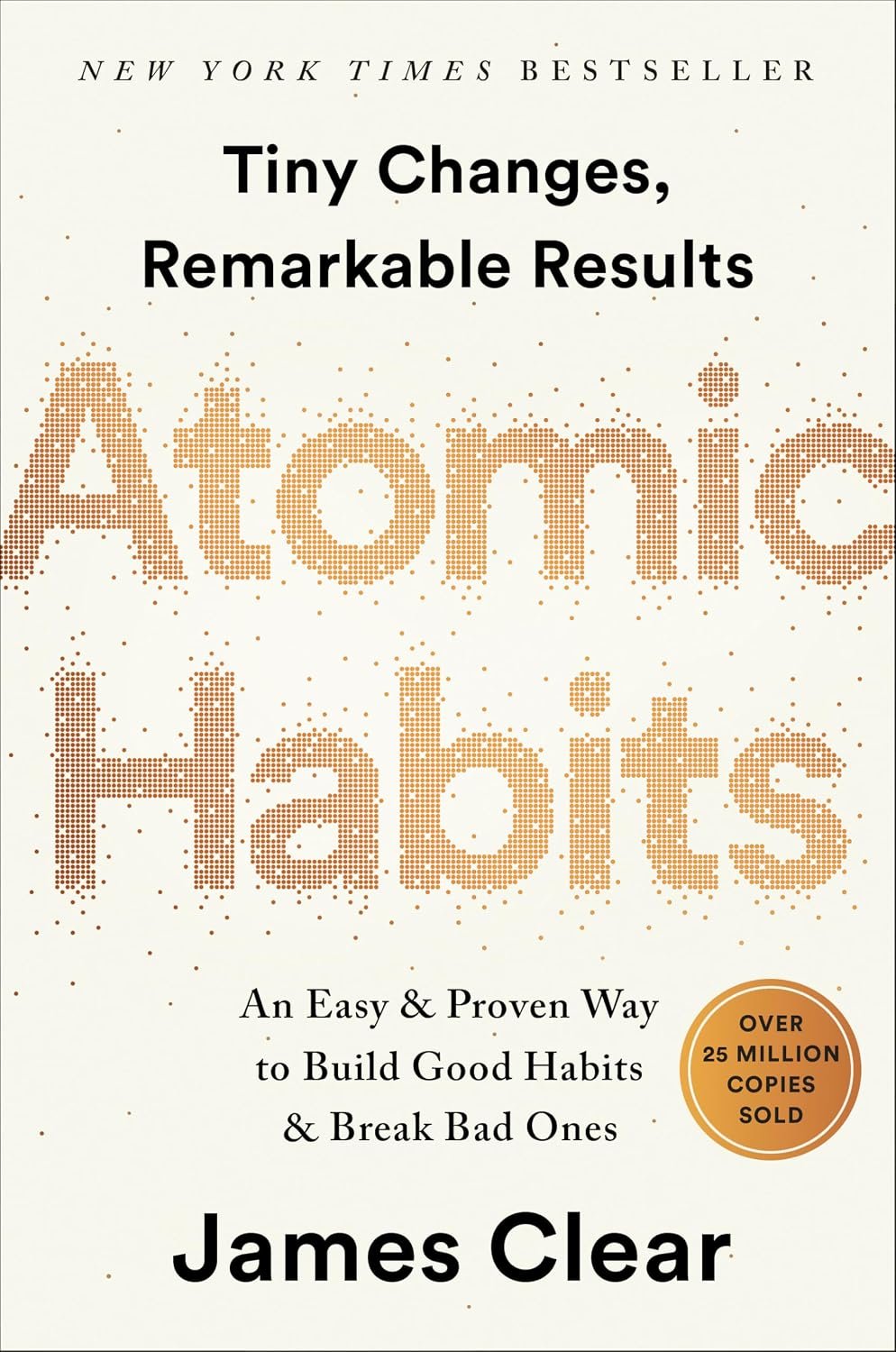
The full title is Atomic Habits: An Easy & Proven Way to Build Good Habits & Break Bad Ones, by James Clear. The publisher describes a practical book about developing good habits, changing unwanted ones, making room for repeated behaviors, and shaping an environment that supports them. The linked US hardcover, published by Avery in 2018, is listed at 320 pages.
That makes it a relevant starting point when your reading question is broader than work. You may want a more dependable writing routine, a regular place for reading in the evening, or a better way to return after missing a planned session. The attraction is the focus on repeated behavior rather than a requirement to organize your entire day around a single demanding task.
Where It Fits, and Where It May Not
- Pros for this reader need: a broad habit-building subject; applications beyond office work; attention to routines and surroundings rather than motivation alone.
- Considerations: if you already maintain reliable routines and mainly need to protect concentrated project time, the subject may be less directly matched to your immediate question than Deep Work.
Before selecting it, name the behavior you want to repeat. A sentence such as reading a little before opening social media is easier to evaluate than becoming a completely different person. This example is our suggested way to clarify a reading goal, not a quoted instruction from the book.
Check the opening sample to see whether you enjoy the author’s explanatory style. A premise can be highly relevant while the delivery is not your preferred kind of nonfiction. Choosing a book you will actually engage with is more useful than treating a recognizable title as compulsory reading.
Deep Work: The Stronger Starting Point for Sustained Attention
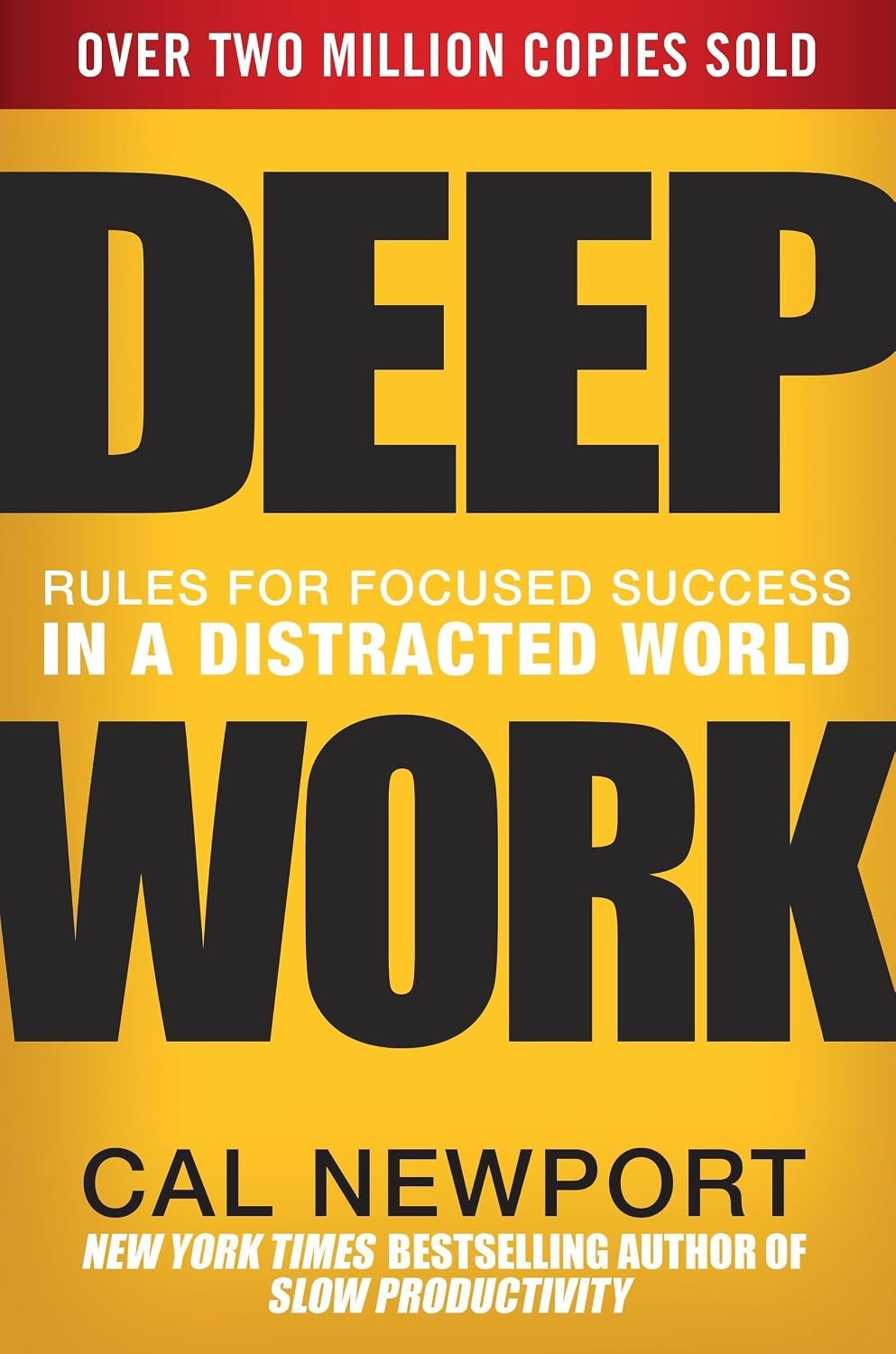
Deep Work: Rules for Focused Success in a Distracted World, by Cal Newport, addresses concentration on cognitively demanding tasks. Its publisher presents both an argument for the value of that ability and practical guidance for developing it. The linked Grand Central Publishing hardcover was published in 2016 and is listed at 304 pages.
The reading fit is more specific than simply wanting better habits. Perhaps you regularly sit down to study, draft, design, or solve a difficult problem, yet your attention gets divided before you make meaningful progress. A book centered on concentration is an obvious candidate when that is the question you want to explore.
Where It Fits, and Where It May Not
- Pros for this reader need: a clearly defined focus on demanding work; a way to examine distraction and attention; particular relevance when your main project requires extended thinking.
- Considerations: its subject is not a promise that everyone can arrange long uninterrupted periods. Readers with highly reactive jobs or limited schedule control should consider which ideas are realistically adaptable.
Ask whether the task you want to improve actually benefits from sustained thought. Drafting an argument and handling urgent customer questions require different working conditions. That is not a judgment that one kind of work is more valuable. It is a reason to choose a book whose central problem resembles yours.
As with Clear’s book, start with the available sample. Decide whether you want an argument about attention and work, not only a set of short motivational reminders. The most useful comparison is between your current need and the book’s stated purpose.
Atomic Habits vs Deep Work: The Differences That Matter
The table compares stated subject matter and editorial reader fit. It does not assign scores, make a sales ranking, or claim that one author produces better results than the other.
| Decision | Atomic Habits | Deep Work |
|---|---|---|
| Author | James Clear | Cal Newport |
| Main subject | Building and changing repeated behaviors | Concentrating on demanding tasks |
| Useful starting question | How can I make this behavior more consistent? | How can I give this task sustained attention? |
| Editorial fit | A broad routine-building problem | A specific focus-intensive project |
| Constraint to consider | A routine must still fit your actual life | Uninterrupted time may require cooperation |
| Linked print edition | Avery hardcover, 2018 | Grand Central Publishing hardcover, 2016 |
| Publisher-listed length | 320 pages | 304 pages |
| Required reading order | No previous book required | No previous book required |
The page-count difference is small enough that it should not make the choice for you. A more relevant question is which topic you are willing to think about after you close the book. The right reading order can differ between two people even when they have the same job title.
Which Book Fits Your Situation?
You Want to Read Regularly but Keep Forgetting
Consider Atomic Habits first if the challenge is giving reading a repeatable place in your day. Before buying, note whether forgetting is really the problem. If the book on your device feels like an obligation, selecting a more appealing story may matter more than adding another nonfiction title to your queue.
Our romance-focused reading-list guide offers a separate starting point for organizing your next reads. Use organizational advice only to the extent that it reduces friction; a longer spreadsheet is not necessarily a better reading experience.
You Study Consistently but Struggle to Finish Difficult Work
Consider Deep Work first when you already show up but spend a session moving between low-effort tasks. Describe one concrete piece of work you want to move forward, such as a section of an essay or a challenging practice problem. That gives you something specific to consider while reading a book about concentration.
These examples are reader-fit scenarios, not guarantees about academic performance. If your difficulty comes from unclear instructions or missing background knowledge, ask for clarification or appropriate learning support rather than assuming that attention alone explains it.
Your Day Is Full of Other People’s Urgent Requests
Pause before choosing either book as the answer. You may need an agreement about response times or priorities more than another personal routine. If it is possible to change a small repeatable behavior, Clear’s subject may feel more immediately applicable. If your team can protect time for demanding work, Newport’s subject may become more relevant. The constraint, not the cover, should guide the decision.
Should You Read Atomic Habits or Deep Work First?
There is no required order: the books are separate works by different authors, not installments in a series. Our editorial recommendation is to choose the obstacle closest to the beginning of your next useful action. If you rarely return to a task at all, consistency is a sensible starting point. If you return reliably but cannot stay with it, concentration is a sensible starting point.
If both apply, use one modest reading experiment rather than committing to two purchases at once. Write down the question you hope the first book will help you think through. Read enough of the sample or book to judge whether its discussion speaks to that question. Then choose one change that is feasible in your circumstances. There is no need to imitate another person’s entire working life.
When you later consider the second title, ask whether it addresses a remaining problem. Reading more productivity books is not automatically progress on the project that made you seek them out. You can also stop after the first if it has given you enough to work with.
This approach is our suggested reading process, not a program claimed by either author. It deliberately avoids a fixed success deadline or a promise that a particular number of days will transform a habit or an attention span.
Kindle, Print, or Audio: Check What the Button Actually Buys
The Amazon buttons link to the verified US hardcover editions, not a subscription offer or a universal format bundle. On the retailer page, confirm the exact title and author before selecting a Kindle ebook or audiobook instead. Language, format, pricing, and availability can differ in the USA, UK, Canada, and Europe.
For digital reading, test a sample on your normal device and consider how you like to save notes. For print, decide whether you want room for annotations or simply a reading copy. For audio, listen to the available sample, verify the narrator and language, and check whether the recording is unabridged. Access to an ebook does not automatically include the audio edition.
This guide makes no current Kindle Unlimited or KDP publication claim for either title. Kindle Unlimited is a subscription program and KDP is a publishing service; they are not interchangeable labels. The original book, a companion workbook, and a third-party summary are also different products. Match the title and author carefully rather than buying the first result with similar words.
Ready for a different kind of reading afterward? VeloraFox’s own ebook and audiobook catalog is separate from these external nonfiction recommendations. Browse it for leisure reading and check each product’s genre and format. We are not claiming that these two books are stocked by VeloraFox.
Atomic Habits vs Deep Work: Frequently Asked Questions
What is the main difference between Atomic Habits and Deep Work?
Atomic Habits focuses on building and changing repeated behaviors. Deep Work focuses on sustained attention for cognitively demanding tasks. This comparison recommends choosing according to whether consistency or concentration is the more immediate obstacle.
Should I read Atomic Habits or Deep Work first?
There is no required order. Our editorial recommendation is Atomic Habits first when returning to a behavior is the main difficulty, or Deep Work first when you show up consistently but struggle to stay with demanding work. Neither book is a prerequisite for the other.
Do I need to buy both books?
No. Start with the title whose subject matches a specific question you want to explore. Consider the second only if it addresses a remaining need. Reading more productivity books is not itself a guarantee of progress on a project.
Which book is shorter in the linked hardcover edition?
Hachette lists the linked Deep Work hardcover at 304 pages, while Penguin Random House lists the linked Atomic Habits hardcover at 320 pages. Page counts can vary between editions, and this small difference does not determine which book is a better fit.
Are these books included in Kindle Unlimited?
This guide does not claim current Kindle Unlimited eligibility for either book. Check the exact Kindle edition in your own Amazon account and country. A print page, an ebook option, or an audiobook option does not by itself prove subscription inclusion.
Are the Amazon buttons affiliate links?
No. They are normal, non-affiliate links to the verified US hardcover product pages. Readers outside the USA should check their local Amazon store for the same title, author, language, and desired format. No ebook or audio bundle is implied.
The Better First Read Is the One That Matches Your Bottleneck
The most useful answer to Atomic Habits vs Deep Work is not that everyone should choose the same winner. Clear’s habit-building subject is a closer match when consistency is missing. Newport’s concentration-focused subject is a closer match when meaningful work keeps losing your attention. Decide what you want help thinking about, check a sample, and choose the exact edition you intend to read.
You do not need to turn your reading list into another performance target. One well-chosen book, approached with a specific question, is a perfectly reasonable place to begin.
Official Sources and Editorial Method
Book identities, stated subject matter, linked editions, and publisher-listed lengths were checked on October 15, 2026. This is an evergreen decision guide, not a current Amazon ranking or a claim of firsthand testing. Current Amazon Best Sellers positions could not be independently verified. Reader-fit scenarios and the suggested reading process are our editorial interpretation, not additional instructions attributed to either author.