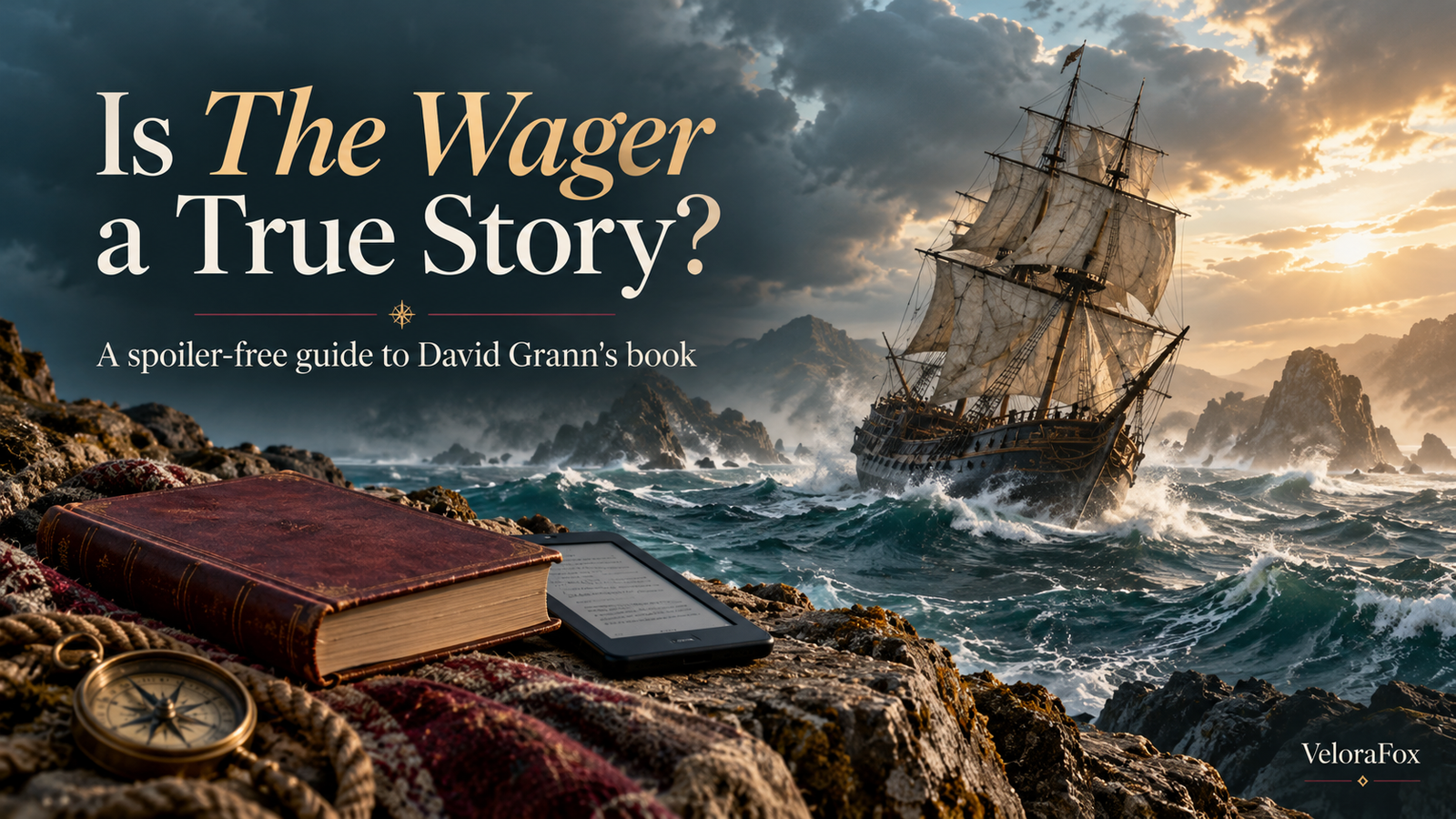
Is The Wager a True Story? 7 Essential Facts
NARRATIVE NONFICTION | SPOILER-FREE BOOK GUIDE
Is The Wager a true story? Yes. David Grann’s The Wager: A Tale of Shipwreck, Mutiny and Murder is narrative nonfiction about a real British naval disaster and its disputed aftermath. The survival story is only the beginning of the reading decision. The more unsettling question is what happens when people live through the same catastrophe and return with accounts that cannot comfortably coexist.
Imagine reaching safety after the sea has taken almost everything, then discovering that survival has not settled the argument. Who will be believed? Which version will travel farther? That tension makes this a useful book to consider if you usually reach for suspense but want your next reading experience grounded in history.
This is a source-checked, spoiler-free introduction, not a firsthand review or a claim that the book tops today’s Amazon charts. Below are seven things to know before reading: what kind of book it is, how to approach its evidence, who it may suit, which edition the button buys, and how to discuss it without giving away the ending.
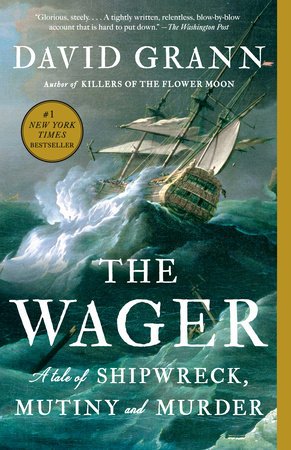
These are separate destinations: Amazon offers the named Grann edition; VeloraFox’s button opens its own ebook and audiobook catalog, not a listing for this book.
1. The Wager Is Nonfiction, Not a Survival Novel
The author’s official book page describes a British ship that left England in 1740, wrecked off Patagonia, and left survivors facing extreme conditions. Accounts of their ordeal later came into conflict, leading to a court martial. That is the historical foundation, not an invented adventure setting.
Calling it narrative nonfiction describes the reading form as well as the subject. You are choosing an account of real events arranged as a story, rather than a fictional plot that merely borrows a period costume. That distinction matters if your main question is whether the danger is imagined or historical.
It also suggests a different way to read. With a novel, you might focus on whether a twist surprises you. With a historical narrative, you can ask another question alongside it: what is the basis for this description, and whose perspective is being represented? You do not need to turn every chapter into an audit. Simply keeping the question available can make the reading more attentive.
For a first encounter, the premise is enough. Avoid searching for the original disaster’s final outcome before deciding whether the opening interests you. The fact that an event is historical does not mean you must learn its entire chronology in advance.
2. A True Story Can Contain Conflicting Accounts
One of the clearest reasons to distinguish The Wager from a generic shipwreck adventure is the disagreement after the disaster. The author’s description establishes that people returned with incompatible accusations. The guide does not resolve those accusations for you.
As a reader, separate three things in your notes: what someone says happened, what another account supports, and what you currently infer. That small distinction prevents an early impression from quietly becoming a settled conclusion. It is useful whenever a nonfiction book contains witnesses, recollections, or people defending their own conduct.
A two-column note is enough
On one side, write a claim or question in a few words. On the other, record who is associated with it and where you encountered it. Leave room to change your mind. You are following a narrative, not preparing a verdict after every page.
This is also a good reason not to rely on a short online plot summary as a substitute for reading. A summary can compress an accusation, a piece of evidence, and an eventual interpretation into one sentence. That may tell you an outcome while removing the uncertainty that makes the reading question meaningful.
The practical aim is not automatic distrust. It is the ability to notice when the book asks you to reconsider what you thought you knew.
3. Survival Is Not the Only Question in The Wager
The publisher’s official reading guide frames discussion around truth, historical knowledge, and human resilience. Those themes offer a way into the book beyond the immediate question of escape. Some of that guide’s detailed questions reveal later events, so save them until you have finished.
A spoiler-free approach is to follow two tracks. The first is practical: what do people need, what resources are available, and which choices are open to them? The second concerns authority: who can give an order, who can challenge it, and what changes when familiar structures no longer feel secure?
These are reading lenses, not promised answers or a substitute for Grann’s argument. They help you decide what kind of nonfiction you want. If you are interested only in equipment, navigation, and the mechanics of a voyage, a broader historical narrative may take you into questions you were not expecting. If you like books that connect individual choices to larger systems, that broader scope may be part of the attraction.
At the end of a session, try writing one practical question and one question about authority. Keep both unresolved if necessary. A useful reading note can record uncertainty instead of forcing a conclusion.
4. Reader Fit Matters More Than the Hype
The subtitle names shipwreck, mutiny, and murder. The official description also involves starvation and extreme hardship. Treat those as meaningful tone signals. A maritime setting does not make this a gentle travel book, and nonfiction does not remove the emotional weight of what happens to people.
Reasons this may be a good choice
- You want history with a central human problem. The premise gives you a specific disaster and a dispute to follow rather than an entire era to survey at once.
- You like reconsidering an initial account. Conflicting versions create a useful question for readers interested in evidence and perspective.
- You want one focused book. This guide concerns a single work, not a series commitment or a list of purchases you must complete.
- You enjoy discussing what a story leaves uncertain. A reading group can examine interpretation without turning the meeting into a contest over who predicted an outcome.
Reasons to pause or choose something else
- You need a comforting read right now. The stated subject includes danger, death, and severe deprivation.
- You prefer invented worlds. Here the interest depends partly on the relationship between storytelling and historical evidence.
- You want a practical how-to book. This is not a manual for sailing, leadership, or survival.
- You dislike reading about contested conduct. Disagreement is part of the advertised premise, not a complication this guide can remove.
These are editorial fit considerations, not a star rating. If you were actually looking for practical nonfiction about routines or attention, our Atomic Habits vs Deep Work comparison addresses that different reading need. Neither genre is the more serious choice; the useful choice is the one that matches your question.
5. The Wager Editions Have Different Page Counts
The publisher’s edition record lists several formats. The Amazon button in this guide identifies the Vintage US paperback, ISBN 9780307742490: 432 pages, published February 25, 2025. It is not being presented as a new 2026 release.
| Format | Publisher-listed length | Publication date | Check before buying |
|---|---|---|---|
| Vintage paperback | 432 pages | February 25, 2025 | ISBN 9780307742490; this guide’s Amazon link |
| Hardcover | 352 pages | April 18, 2023 | Binding and ISBN 9780385534260 |
| Ebook | 352 pages listed | April 18, 2023 | Selected digital edition and device compatibility |
| Audiobook download | 8 hours 28 minutes | April 18, 2023 | Sample, edition, and current purchase or subscription terms |
A longer printed page count does not by itself prove a different story or added narrative. Layout, binding, and edition design can affect pagination. This guide does not claim every format has identical supplementary material; check the contents of the edition you want if that matters to your purchase.
For a print book club, agreeing on an ISBN can simplify page references. If members use different editions, discuss a chapter or section boundary instead of assuming that page 100 means the same stopping point for everyone.
Readers in the UK, Canada, and Europe may see different jackets, local editions, or availability. Keep the exact title and author as your first checks. The buttons here are ordinary US Amazon links, not location-aware redirects, and no fixed price or stock level is promised.
6. A Book-Club Plan Can Protect the Reading Experience
A nonfiction discussion does not have to start by announcing the ending. Before your group begins, agree whether the meeting will cover the whole book or only a shared stopping point. Make that boundary visible in the invitation and any group chat.
The following prompts are original, general reading questions. They are not quoted from the publisher’s guide and do not require anyone to know a later outcome:
- What did you assume about the people or situation before the text gave you evidence?
- Which distinction between an observation and an interpretation became important to you?
- When did your confidence in an account increase or decrease, and what caused that change?
- How did practical needs influence the choices you were willing to understand, even if you did not agree with them?
- What question would you want to ask a person describing these events?
- Which issue would you investigate further after finishing, rather than interrupting the story to research it now?
Make room for different responses
One reader may be absorbed by the historical setting while another focuses on how a claim is supported. Both can contribute without reducing the conversation to a single approval score. Invite members to name their question before defending their interpretation.
After everyone finishes, move to the publisher’s fuller discussion guide. That separates a first reading from a second-stage conversation and gives spoiler-sensitive readers a clear point at which they can safely explore more.
7. You Can Start Without Studying the Ending
The simplest next step is a sample, not a research project. Read enough to decide whether you want to spend time with this subject and this narrative voice. You do not need to buy another Grann title first to test your interest in The Wager.
Use a small reading routine
Choose one repeatable session length and keep a brief note at the end: a name, a question, and where you stopped. If unfamiliar maritime vocabulary slows you down, add only terms that genuinely block understanding. A running list of every new word can turn curiosity into unnecessary work.
For the 432-page paperback, 30 pages per reading day would mean roughly 15 reading days; 50 pages would mean roughly nine. Those are simple page-count calculations, not promises about speed. Allow extra time for notes, back matter, or a chapter you want to revisit.
Choose audio deliberately
If you prefer listening, sample the available narration before buying. Use a short session first, and pause when a name or change of setting needs attention. When switching between print and audio, match a chapter or recognizable passage rather than assuming a page number corresponds to a particular playback time.
Kindle Unlimited, KDP publication, and audiobook subscriptions are separate matters. This guide verifies a book and a linked print edition; it does not infer any of those services from the presence of an Amazon listing.
For a completely different fictional reading project, our Wayward Pines reading-order guide explains how to approach a connected mystery trilogy. It is a fiction alternative, not a prerequisite or companion volume to this nonfiction book.
VeloraFox also has its own ebook and audiobook catalog. Explore that collection independently of the external David Grann recommendation; the catalog button is not a claim that VeloraFox stocks The Wager.
Frequently Asked Questions About The Wager
Is The Wager a true story or a novel?
The Wager: A Tale of Shipwreck, Mutiny and Murder by David Grann is narrative nonfiction, not a novel. It concerns the historical HMS Wager disaster and the conflicting accounts that followed. A dramatic narrative does not make its subject fictional.
What is The Wager about without spoilers?
It follows a British naval expedition, a shipwreck off Patagonia, the struggle to survive, and disputes about what happened. This guide leaves the eventual outcomes and judgments to the book rather than summarizing them.
Which paperback does the Amazon button open?
The button opens the US Vintage paperback listing for The Wager by David Grann, ISBN 9780307742490. The publisher lists that edition as 432 pages, published February 25, 2025. Confirm the selected format before purchasing.
Do I need sailing knowledge before reading The Wager?
You do not need to complete a naval-history course first. Start with the sample and use the book’s own context as your guide. If unfamiliar terminology interrupts your reading, keep a short glossary instead of researching the historical ending.
Is The Wager included in Kindle Unlimited or an audio subscription?
No subscription inclusion is promised here. The link is to a specific paperback product page. Check the selected ebook or audiobook edition and the current offer in your Amazon account; a print listing does not establish Kindle Unlimited or audio eligibility.
Does this guide reveal the ending of The Wager?
No. It discusses the premise, reading approach, format choices, and discussion themes without explaining the final outcomes. Some linked author and publisher pages offer longer summaries or questions that are better visited after reading.
Official Sources and Edition Checks
References checked October 19, 2026. The author and publisher establish the book’s identity and premise; the edition page supplies the format details; the Amazon listing identifies the linked paperback. Longer descriptions and discussion material can reveal more than this guide does.
- David Grann: official The Wager book page
- Penguin Random House: The Wager formats and Vintage paperback record
- Penguin Random House: official reader’s guide
- Amazon: exact The Wager paperback listing, ISBN 9780307742490
A Real Disaster, and a Reading Question Worth Following
The Wager is a true-story reading choice, not a survival novel masquerading as history. Its premise invites you to follow both an ordeal and the difficulty of understanding what people say about it afterward. That is a stronger reason to consider the book than an unsupported claim that everyone is reading it this week.
Choose it if you want historical narrative, human stakes, and room to question an account. Check the format, try the sample, and let the book reveal its own outcomes. You can learn that the story is real without surrendering every discovery before the first chapter.
Amazon links are non-affiliate product links. No current sales rank, Kindle Unlimited inclusion, KDP status, price, or subscription benefit is claimed.